
FRP Pultruded Channel – Lightweight, Corrosion-Resistant Structural Solution
Axiom Composite Pvt Ltd manufactures high-performance FRP Pultruded Channels designed as a lightweight and durable alternative to conventional steel C-channels. Manufactured using the continuous pultrusion process, these fiberglass-reinforced polymer channels provide consistent strength, dimensional stability, and long-term resistance to corrosion, moisture, chemicals, and UV exposure.
FRP Pultruded Channels are particularly suitable for applications where traditional metal channels may suffer from rust, electrical conductivity, or high maintenance requirements. Their excellent strength-to-weight ratio makes them ideal for structural framing, cable support systems, marine structures, handrails, platforms, and general fabrication.
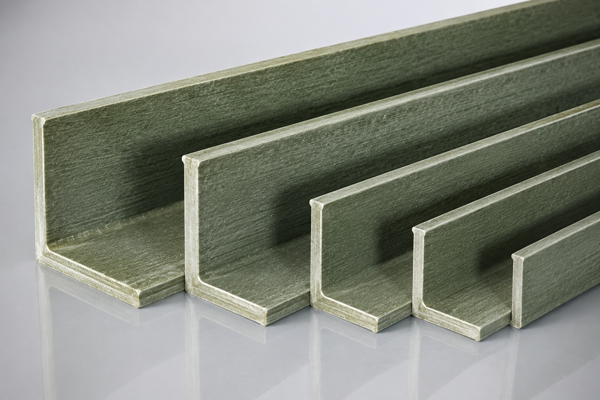
An FRP Pultruded Channel is a structural profile manufactured by pulling continuous glass fibers through a resin matrix and a heated forming die. This continuous pultrusion process produces a uniform C-shaped channel with consistent mechanical properties throughout its length.
Unlike conventional steel channels, FRP channels do not rust or corrode when exposed to water, chemicals, salt spray, or humid environments. They are also electrically non-conductive, making them an excellent choice for installations where electrical insulation and safety are important.
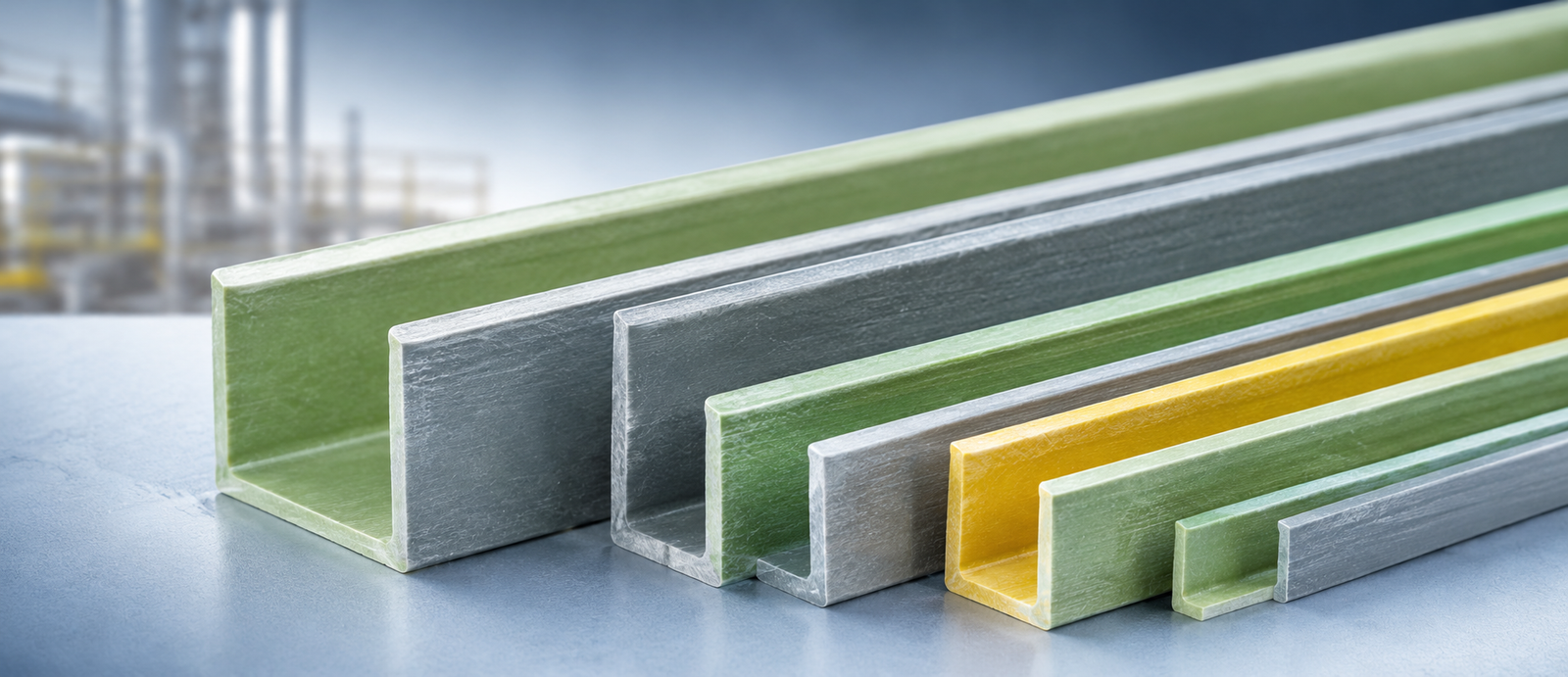
At Axiom Composite Pvt Ltd, FRP Pultruded Channels can be manufactured in different sizes and configurations according to project requirements, making them suitable for both industrial and infrastructure applications.
FRP Pultruded Channels are versatile structural profiles used across industrial, commercial, infrastructure, and marine applications.
FRP Pultruded Channels provide excellent structural strength while being significantly lighter than many traditional metallic profiles. Their lightweight construction simplifies transportation, handling, installation, and on-site fabrication.
One of the major advantages of FRP channels is their resistance to corrosion. They can withstand exposure to moisture, chemicals, saltwater, and harsh industrial environments without developing conventional rust.
FRP is naturally electrically non-conductive. This makes FRP Pultruded Channels suitable for applications near electrical systems and environments where electrical isolation or spark-free construction is required.
The pultrusion manufacturing process produces a continuous profile with a constant cross-section. This helps provide uniform structural performance along the full length of the channel.
FRP Pultruded Channels can be cut, drilled, and fabricated using commonly available tools and installation methods. Their manageable weight also makes on-site installation easier.
Unlike steel and some conventional materials, FRP does not rust or rot. This makes it particularly useful in outdoor, humid, coastal, marine, and industrial environments.
FRP channels can be used in outdoor applications where exposure to sunlight and changing weather conditions is expected. Their resistance to UV degradation helps support long-term outdoor performance.
FRP Pultruded Channels are versatile structural profiles used across industrial, commercial, infrastructure, and marine applications.
FRP channels are suitable for supporting cable management systems, electrical installations, cable trays, and related infrastructure. Their non-conductive characteristics can provide an added advantage in electrical environments.
Marine environments expose structural materials to moisture, saltwater, and corrosive conditions. FRP Pultruded Channels provide a corrosion-resistant solution for marine structures, supports, walkways, frameworks, and fabrication requirements.
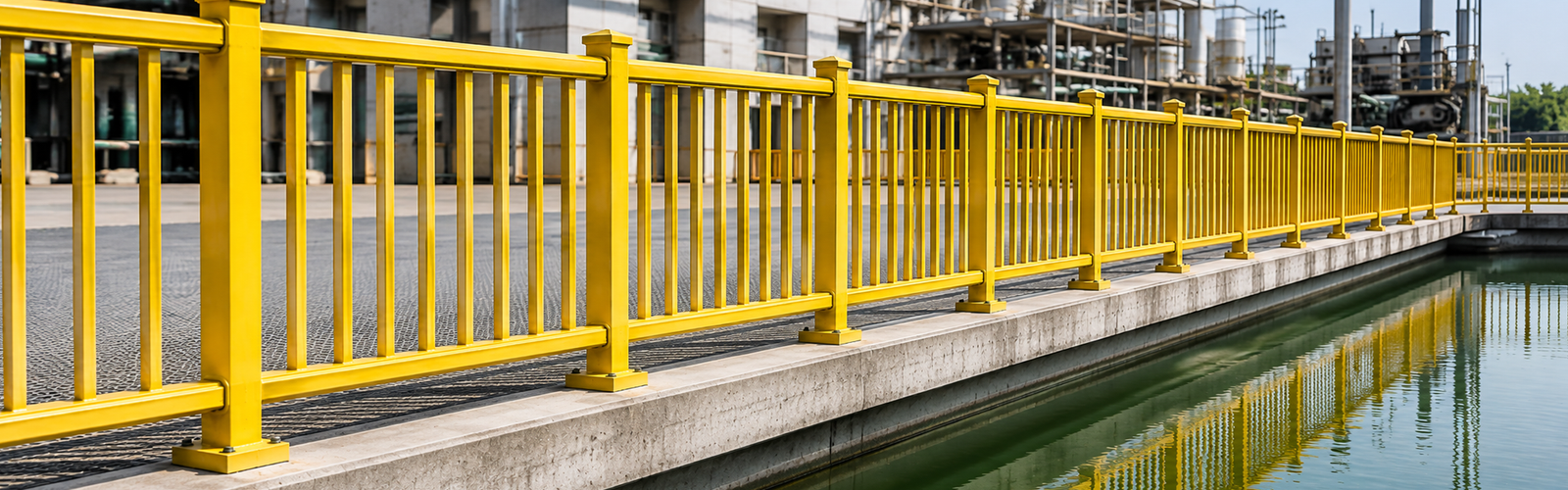
The lightweight and corrosion-resistant properties of FRP make pultruded channels suitable for handrail and safety-rail structures in industrial plants, water treatment facilities, chemical plants, and outdoor infrastructure.
FRP channels can be used as structural framing members for platforms, supports, equipment frameworks, access structures, and other lightweight structural assemblies.
Chemical processing environments can be highly aggressive toward conventional metals. FRP Pultruded Channels offer excellent resistance to many corrosive environments and can help reduce maintenance associated with rust and corrosion.
Because FRP channels can be easily cut, drilled, and assembled, they are suitable for customized fabrication projects where lightweight and corrosion-resistant structural profiles are required.
Traditional steel C-channels are widely used in structural applications, but they can become vulnerable to rust and corrosion, especially in humid, chemical, coastal, and marine environments. FRP Pultruded Channels provide an alternative solution with several practical advantages.
| Feature | FRP Pultruded Channel | Conventional Steel Channel |
|---|---|---|
| Corrosion resistance | Excellent | Requires protection |
| Weight | Lightweight | Heavy |
| Electrical conductivity | Non-conductive | Conductive |
| Rust resistance | Does not rust | Can rust |
| On-site fabrication | Easy to cut and drill | Requires heavier tools |
| Maintenance | Low | Can require regular maintenance |
| Marine suitability | Excellent | Requires corrosion protection |
| Chemical environments | Highly suitable | Material-dependent |
Choosing FRP Pultruded Channels can provide both installation and long-term operational benefits. Their lightweight construction can reduce handling requirements, while their corrosion resistance can help minimize maintenance and replacement costs.
The non-conductive nature of FRP makes these channels especially useful around electrical infrastructure. Their resistance to moisture, chemicals, rust, rot, and UV exposure also allows them to perform in demanding environments where conventional materials may require frequent protective coatings or replacement.
Because FRP profiles maintain a consistent cross-section throughout their length, they are suitable for engineered structural assemblies where dimensional consistency is important.
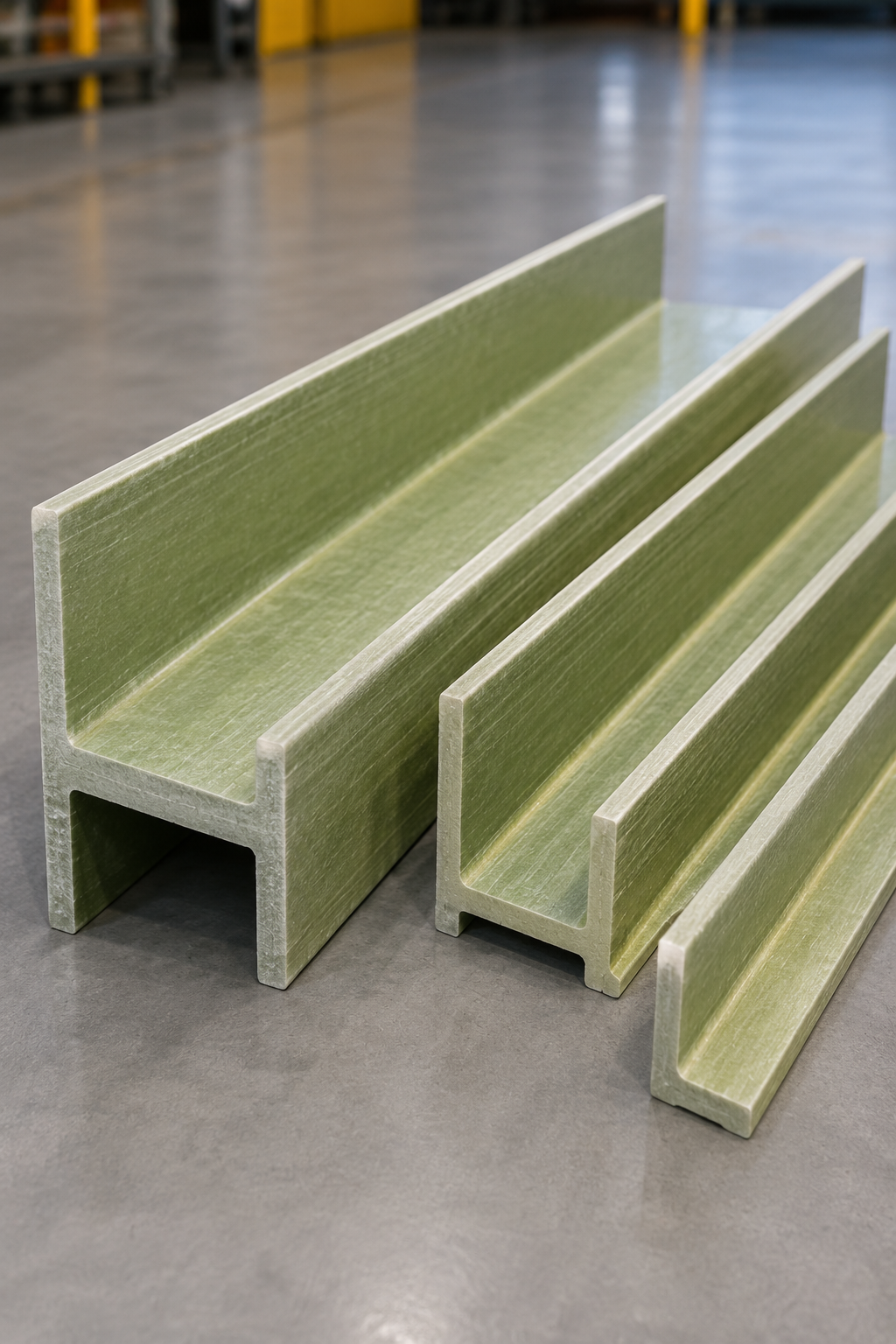
Modern industries increasingly require materials that can deliver durability without adding unnecessary weight. FRP Pultruded Channels meet this requirement by combining fiberglass reinforcement with a polymer resin matrix.
They can be incorporated into industrial structures, cable support systems, access platforms, marine installations, chemical processing facilities, and customized fabricated assemblies. Their corrosion-resistant properties make them particularly valuable in areas exposed to water, chemicals, humidity, and salt-laden air.
FRP Pultruded Channels are manufactured through a continuous pultrusion process. Continuous reinforcing fibers are impregnated with resin and pulled through a specially designed heated die. The die determines the final channel profile and dimensions while the resin cures to form a rigid composite section.
This controlled manufacturing process provides:
The resulting FRP channel combines structural performance with the inherent benefits of fiberglass-reinforced polymer materials.
Different projects have different structural and installation requirements. Axiom Composite Pvt Ltd can provide FRP Pultruded Channel solutions based on application requirements, including profile dimensions, wall thickness, length, and other project-specific specifications.
Customized FRP profiles can be considered for industrial structures, cable support systems, marine applications, handrails, fabrication projects, and other applications where standard metallic channels may not provide the desired combination of weight, corrosion resistance, and electrical insulation.
Discuss Your RequirementAxiom Composite Pvt Ltd focuses on providing reliable FRP/GRP composite solutions for demanding industrial and infrastructure applications. Our FRP Pultruded Channels are designed to provide a practical combination of strength, lightweight construction, corrosion resistance, electrical insulation, and low maintenance.
With application-focused FRP solutions and customization capabilities, Axiom Composite Pvt Ltd helps industries select composite profiles suited to their specific operating environment and structural requirements.